Showing posts with label biology. Show all posts

Tuesday, 23 September 2014

Rabies: the 11,000 base pairs that can ruin the brain


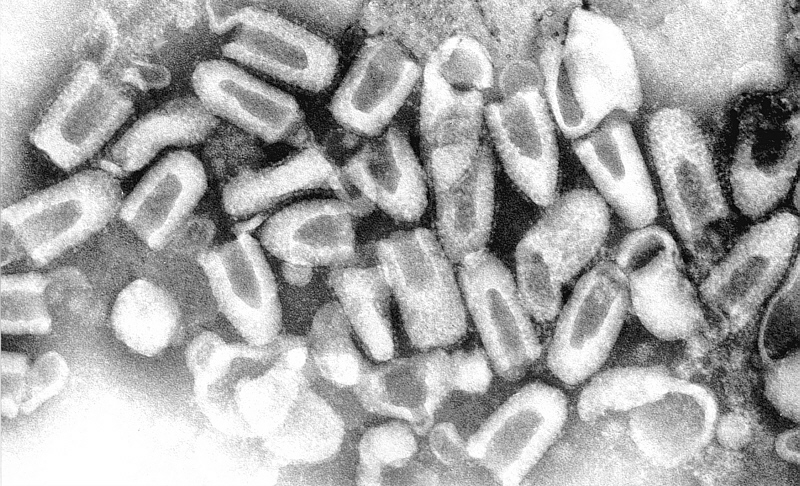
Lyssavirus

On the 16th October 2004, a teenage girl was brought to the Children's Hospital of Wisconsin and tested positive for a disease that all the hospital staff knew had a 100% mortality throughout all recorded history. Her parents were given two options, to put her in a dark room in the Hospital to die or take her home to die.
That September, the girl, Jeanna Giese, was bitten by a strangely acting bat on her left index finger. On 13th October, Jeanna felt ill and had tingling in her left arm, but from there deteriorated rapidly. She couldn't walk, her left arm twitched uncontrollably and her speech was slurred. Hours after arriving at the Hospital she became stuporous. She had rabies, and appeared to be going the same way as all other rabies victims.

Rabies is caused by viruses of the genus Lyssavirus, all of which as around 11,00 base pairs long. The disease is zoonotic, meaning it's host is non-human animals. Rabies can infect almost all warm-blooded animals, though the disease is mainly transmitted to humans via contact with the saliva of bats, dogs, raccoons and some other animals. Rabies is a peculiar virus. The classic virus enters the blood stream and circulates until it reaches it's target where it replicates. Rabies does not take this blood route; instead it takes the nervous route. The virus binds to the nerve nearest the bite and inches it's way up the periphery nerves and into the central nervous system until it gets to the brain. It travels under 2 cm a day, therefore it will take longer to travel to your brain if you are bitten on the toe, maybe months, but when bitten on the face it could take a week. This window of time is crucial, as this is when you can administer a vaccine to cause the body to mount an immune response which destroys the virus. When the virus reaches the brain the vaccine is useless, as the virus will now act at a swifter speed that any normal immune response can.
What the virus does in the brain is unknown. The two main theories are that it either over-excites the brain so that it cannot carry out normal functions and the person dies (known as excitotoxicity) or that it simply inflames and kills neural tissues.
This is what is does to a patient's biology, but it does much more to the patient's behaviour.
30% of patients experience paralytic rabies, where they are paralysed and then slip into a coma and die of heart or other organ failure.
The rest have a different fate. A few days before death they experience convulsions, hallucinations and explosive rage. The brain cannot regulate their body; throat spasms cause wild cries and they can die by drowning in their own blood or organ failure. This behaviour is very animalistic and uncontrollable, it could explain the werewolf myth.
But the truth is more chilling. A person's behaviour is not driven by human logic but by a virus' need to replicate; a sentient being acts this way because of a simple virus. Patients experience hydrophobia so they can't drink, which then dilutes their saliva and they cannot swallow, meaning that their virus-rich saliva can only go one way. They are aggressive so they might bite and spread the virus. This is an assault to our idea of free will; if a micro-organism that isn't really alive can change our behaviour so much, then are we as autonomous as we like to think? It is one of the most undignified ways to die imaginable.
Therefore, Jeanna's doctor, Rodney Willoughby, was not content to see his patient die without doing something. He thought that, if rabies was an excitotoxic disease, then if the immune system was given enough time to catch up with the virus so antibodies were produced in time so the patient could recover. So Dr Willoughby put Jeanna into a coma and waited. This was an enormous risk, as she could be brain-damaged if she even survived at all. 7 days later she was brought out of a coma and though weak and frail, alive, against the entirety of scientific consensus. 
She had produced enough antibodies in enough time for her immune system to fight off the virus, the first person known to have encountered rabies and come out alive.
Jeanna was very weak, and had to be treated with drugs including ketamine and antivirals. She has been through many years of rehabilitation and treatment, but today is healthy and spends her time with her sled dog team, and despite her experiences still has a love for bats (as we all should). 
There is, however, controversy as to the effectiveness of Dr Willoughby's treatment, which is called the Milwaukee protocol and has been used on a handful of other patients, with only 4 of 35 surviving, which is still an impressive survival rate for rabies. It has been suggested that Jeanna and the others survived because they were genetically "fitter" to withstand rabies, they were infected with a weakened form or rabies or bitten on a "safer" area or all of these together. There are even reports of some populations (mostly remote, Amazonian populations) found with rabies anti-bodies in their blood (with no signs of rabies, and they probably couldn't have recovered without the Milwaukee protocol), indicating a genetic resistance to rabies, in a similar way that some tropical populations have a genetic resistance to malaria. 

Bibliography


http://www.ncbi.nlm.nih.gov/pmc/articles/PMC3414553/ : This is by Rodney Willoughby himself. 


Saturday, 9 August 2014

The evolution of the oocyte


A human egg cell, the corona radiata is on the outer surface, the zona pellucida is the clear ring behind it. 


Oocyte is the name for an immature egg cell (ova, in animals), an oocyte only becomes an egg cell finally when it is fertilized. 
The oocyte and the spermatozoa (sperm cell) are the sex cells of organisms which reproduce sexually, that is by combining the genetic material of two different organisms. Yet, the very earliest cellular organisms must have reproduced asexually, so why does the vast majority of complex organisms produce sexually exclusively? What caused this change, and why did it proliferate?

There is much speculation on why so many organisms switched from asexual to sexual reproduction. It is likely that sexual reproduction arose in an ancestor of the eukaryotes (organisms with more complex cells), deep in the Precambrian. But sexual reproduction has an immediate flaw, only half the population are capable of producing offspring physically, the females. An asexual population would quickly out-compete a sexual one purely by virtue of being able to grow at twice the rate of a sexual one. This is known as the “two-fold cost of sex”. However, this overlooks the role of the male. Males provide genetic diversity to a particular population, as when the sperm and ovum haploid genomes recombine in fertilization to form a zygote with a diploid genome, and therefore two copies of the same gene from each parent. In recombination, genetic “mistakes” in the sequence of base pairs should be corrected. Hybrids between two populations of the same species tend to be fitter genetically, a process known as heterosis (this is not always the case in all hybridizations, however). Therefore, an organism produced sexually may be more resistant to disease than asexually produced organisms. This is probably why almost all complex organisms (except very few, like the New Mexico whiptail lizard, which can also be created by hybridizing two other whiptail species) reproduce sexual, as they need to compete in a more dynamic ecology, so need the fast acquisition of advantageous traits in the whole population that only sexual reproduction. 


Isogamy and Anisogamy 


Some of the more primitive single-celled organisms reproduced by fission, which is regular cell division into genetically identical offspring cells. However, most single celled organisms swap genes, occasionally, through genetic recombination or the transfer of a nucleus mostly with organisms from a separate population, which has accumulated different genetic mutations to it's population. This is probably how sexual reproduction arose in the earliest organisms. Eventually specific cells began to specialize, by carrying the haploid genome of the organism, so it would combine with the haploid genome of another organism to create a diploid organism. This is this basis of sexual reproduction.
The gametes in these early sexual organisms would have appeared the same, only the haploid genome would be different between the two. This is known as isogamy, where each gamete has the same morphology. The gametes in some organisms began to specialize further, into anisogamy, where one gamete is larger than the other. One modern partially isogamous species is the green algae Volvox. In a study, colonies where all the gametes were small (isogamy) produced a smaller population, whereas anisogamous populations were larger. This shows that when there is one large gamete, which has a larger energy reserves (yolk granules in the cytoplasm) but is slower, and one small gamete, which can move faster but does not have large energy reserves, population sizes are larger. Anisogamy means that one gamete, the oocyte, can specialize in providing a larger energy supply for the zygote after fertilization and the other, the spermatozoa can specialize in being fast and numerous. This is a particular type of anisogamy known as oogamy. 
Due to the large tax on energy resources for the female there is a great difference between ovum and sperm number, there are around 400 ovum ovulated by a woman who has reached menopause compared to 200-500 million spermatozoa per ejaculate for human males, and up to 8 billion per million per ejaculate for domesticated pigs (who have been breed to be as fertile as possible).


Egg Laying 


The first vertebrates to have ova were reptiles, as when on land they could not reproduce by spawning. In reptiles, and later in birds, the ova once fertilized forms protective layers (the egg shell) and is passed out through the oviduct. In some of these species, the embryo is then kept warm (incubated) by mostly the mother (the father and mother Whooping Crane alternatively incubate the egg). This is known as ovipartity, and the embryo receives nutrition only from the nutritive yolk, meaning than in oviparous animals, more energy is needed to create the ovum than in viviparous animals (who have live young). But after fertilisation, there is less need for parental care, therefore enabling more offspring to be produced. The offspring, due to lack of long-duration parental care, have a higher mortality rate, but more are produced in relation to the amount of energy the parents lose in reproduction. Only a small number of mammalian species produce eggs (the monotremes) including the duck-billed platypus, which are descended from the some of the earliest mammals and hence having features common and almost unique to both mammals and reptiles.


The Zona Pellucida


The oocyte has multiple barrier to stop polyspermy (multiple sperm entering the oocyte, therefore producing a cytoplast with around double the normal number of chromosomes for the species, which would be unable to survive). Polyspermy may arise from having sperm that is too efficient at surviving and fertilising the oocyte, therefore a male with very efficient sperm may not pass on it's genes due to his offspring's inability to survive.
Sperm that is more efficient at fertilising an oocyte does not mean that it is beneficial to the female (for reasons as seen above) as this sperm may not have the best genetic material to pass onto successive generations. If mammals and reptiles evolved using spawning as a reproductive method, there would be all sorts of genetic problems as the only “screening process” would be that the sperm would be from an animal that had reached puberty. This gives rise to a very complex genital system in polygamous species, such as that seen in the Pekin Duck. The female Pekin Duck has a maze-like vagina to be able to “pick” the best sperm for reproduction. To counter this the male has a “corkscrew”-like penis and only the males with the precisely shaped penis for that one female's vagina will fertilise the oocyte. 
The first barrier to the sperm is the zona pellucida, then the plasma membrane, which also protect the fertilized ova on it's journey through the oviduct (or in the water in fish and amphibians). The zona pellucida is an essential feature, if it is not present the female will be infertile. It stops sperm from other, genetically incompatible species from binding and also emits chemicals that guide the sperm cells towards the oocyte. In ovipartial species, when the nucleus of the sperm and oocyte fuse, the zona pellucida signals for a release of calcium ions which eventually transform into the egg shell. For fertilization to occur the nucleus of the sperm needs to bind with the zona pellcida and “bore through” it, fusing in the oocyte's cytoplasm. After fertilisation the cortical reaction is triggered, which causes the plasma membrane to fuse and become impermeable to sperm. Without the zona pellucida, gametes from incompatible species can fuse, though the offspring are not viable.
Genes encoding on the surface of gametes are some of the most rapidly evolving genes, even faster than those responsible for immune responses, which have to adapt quickly due to microbe attacks. If the oocyte is "under pressure" to reduce polyspermy, the proteins on the surface of the oocyte will change, so that fewer sperm are compatible with the oocyte, meaning there is a smaller probability of polyspermy.


Bibliography